From June 27 to 30, the semifinals and finals of the 7th China Returnee Entrepreneurship Competition, co-hosted by the China Technology Entrepreneurship Association Returnee Start-up Park Alliance and the People's Government of Changping District, Beijing, were successfully held online. Nearly a hundred returnee entrepreneurship projects competed against each other, with 20 projects advancing to the finals. In the end, the "Anti-aging Peptide Drug R&D" project of Nanjing Anji Biotech Co., Ltd.'s technology team ranked second in the overall score and first among biomedical projects.
On June 29, 2022, the monthly roadshow of biomedical financing projects "Win in Nanjing - Science & Innovation Future" (Session 43, innovative drugs special) was held both online via Tencent Meeting and live-streamed on WeChat. More than 500 investors, scientists, entrepreneurs and clinical experts from the biomedical field participated.
On May 19, 2022, Nanjing Anji Biotech Co., Ltd. formally appointed Dr. (Professor) Wenle Xia as Chief Advisor of its Scientific Committee. Dr. Hanmei Xu, the company's founder and Chief Scientist, formally presented the Chief Scientific Advisor appointment certificate to Dr. Xia, and both parties reached a cooperation intention.
On March 25, 2022, Nanjing Anji Biotech Co., Ltd. held a scientific advisor appointment meeting in its conference room. At the meeting, Anji Biotech appointed Professor Edouard Nice as its scientific advisor. Dr. Hanmei Xu, the company's Chairman and Chief Scientist, formally presented the appointment certificate, and both parties reached a cooperation intention.
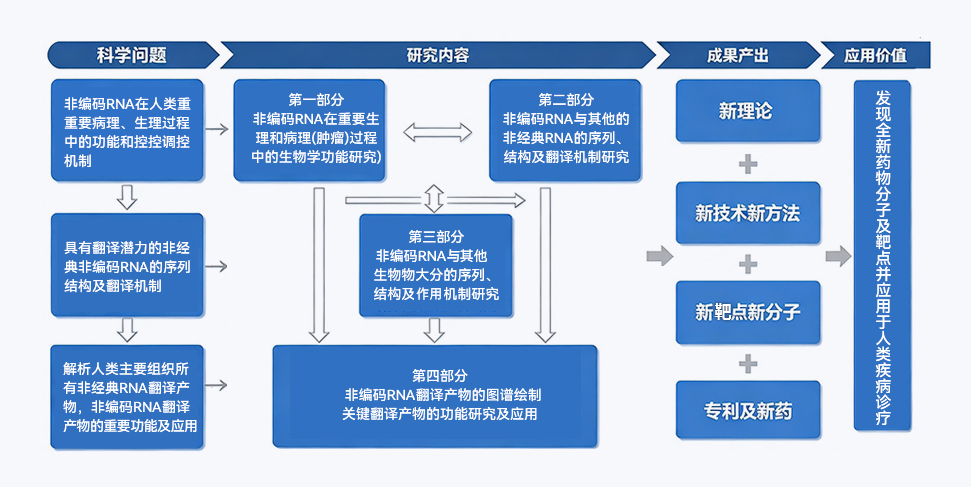
The discovery of micropeptides is an emerging topic in the ncRNA (non-coding RNA) field. Initially considered non-coding, advances in gene editing and multi-omics have deepened micropeptide research - scientists have gradually found that some ncRNAs do possess coding potential, and some of the micropeptides they encode exhibit tumor-type specificity.
The discovery of micropeptides is an emerging topic in the ncRNA (non-coding RNA) field. Initially considered non-coding, advances in gene editing and multi-omics have deepened micropeptide research - scientists have gradually found that some ncRNAs do possess coding potential, and some of the micropeptides they encode exhibit tumor-type specificity.
No matching content found. Please try other keywords.
Peptide research has a long history, and achievements in the field have repeatedly won Nobel Prizes. Nobel laureate Steven Chu once declared: the 21st century is the century of peptides. From the discovery of the endogenous peptide insulin in 1923, the first artificial synthesis of the peptide hormone oxytocin in 1955, to the discovery of brain neuropeptide signaling in 2000, peptides have continuously demonstrated immense biomedical value. Market data likewise confirm the prospects of this field: the global peptide drug market is expected to reach US$141.9 billion by 2030, and China's peptide market is expected to exceed US$40 billion by 2024.
Meanwhile, major studies published in Nature and Science continue to reshape scientific understanding: the existence of non-canonical start codons (NTCs) means that molecules previously defined as ncRNA can encode micropeptides/microproteins, overturning long-held beliefs about the translation machinery. According to 2020 data from the International Agency for Research on Cancer (IARC) of the World Health Organization, China ranks first globally in both new cancer cases and deaths, and the industry urgently needs new approaches to achieve a dual "prevention + treatment" strategy for cancer. Micropeptide technology holds enormous potential for developing both diagnostic and therapeutic drugs.
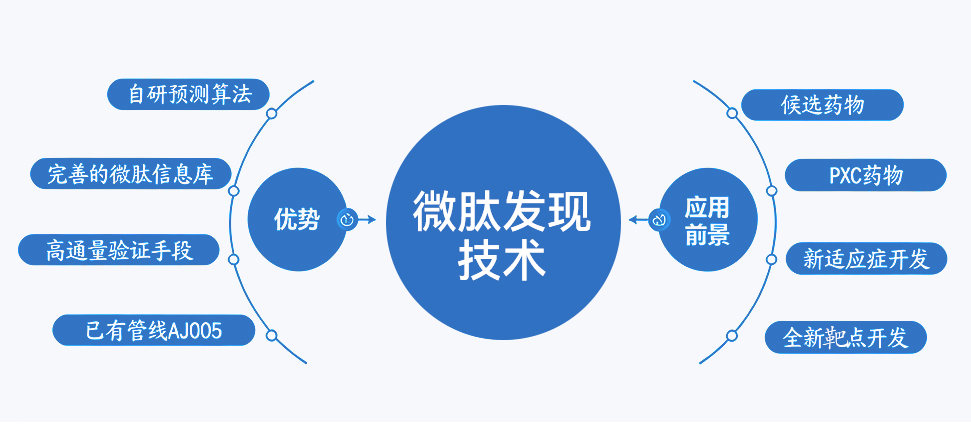
China currently faces a severe shortage of FIC molecules and novel targets for major disease diagnosis and treatment. As multi-omics and gene-editing technologies advance, the traditional definition of ncRNA is no longer rigorous - a large number of ncRNAs have the potential to translate into micropeptides/microproteins, representing a blue ocean for new drug discovery. Anji Biotech is precisely the innovative enterprise in China that has mastered the core technology for high-throughput discovery of endogenous biological micropeptides.
These micropeptides - translated from ncRNA and typically less than 100 amino acids in length - are widely involved in numerous life activities, regulating muscle development, angiogenesis, energy metabolism, immune responses and tumor progression, and playing key roles in both physiological activities and disease onset and development.
Leveraging its unique technological advantages, Anji Biotech has grown into a leading enterprise in this field: the team's multiple micropeptide research results have been published in authoritative journals such as JACS and Molecular Cancer, and have been translated into multiple invention patents. At the fundamental science level, Dr. Hanmei Xu, together with Academician David J. Craik of Australia, has reinterpreted the nature of non-coding RNA, proposing to rename non-coding RNA as potential coding RNA; the findings were published in Cancer Letters. The company continues to seize the global high ground in the discovery of ncRNA and its translation products, building a scientific, advanced and implementable innovative drug R&D system.